Successful rescue stenting with pEGASUS-HPC after failer thrombectomy in M1 occlusion
This case highlights the successful management of a recalcitrant M1 occlusion that remained refractory after four thrombectomy passes, demonstrating how rescue stenting can achieve stable recanalization and excellent clinical recovery.
Clinical presentation
A 79-year-old male with a previous history of smoking, diabetes mellitus and hypertension
He arrived to the emergency department at 02:00 PM due to a sudden onset of speech disturbances and right hemiplegia upon waking at 6 am. Last time seen well was at 10:00 PM of the previous day
Neurological examination indicated motor aphasia, right central facial paralysis, grade 1 right limb muscle strength, and shallow sensory loss of the right limb. NIHSS score was 15
Baseline cranial CT showed no signs of established infarction (ASPECTS 10). CT angiography showed occlusion at the origin of the left internal carotid artery (ICA) and CT perfusion showed mistmatch in the left MCA territory
IV thrombolysis is not administered due to unknown onset of symptoms, and MT was performed
Baseline CT scan (left) and CT perfusion (right): Absence of signs of established ischemia (ASPECTS 10) with slight hyperdensity in left M1 segment, and mismatch in the left MCA territory
CT angiography: occlusion at the origin of the left ICA (arrow) and slight opacificacion of left intracraneal ICA and left ACM
Left CCA angiography: occlusion at the origin of the left ICA.
After two angioplasty maneuvers with a 4x40 mm and a 5x40 mm balloon catheter was not feasible to reopen the origin of ICA
After that, aspiration with a 0.072” catheter at the origin of ICA achieved recanalization of the cervical and intracranial ICA
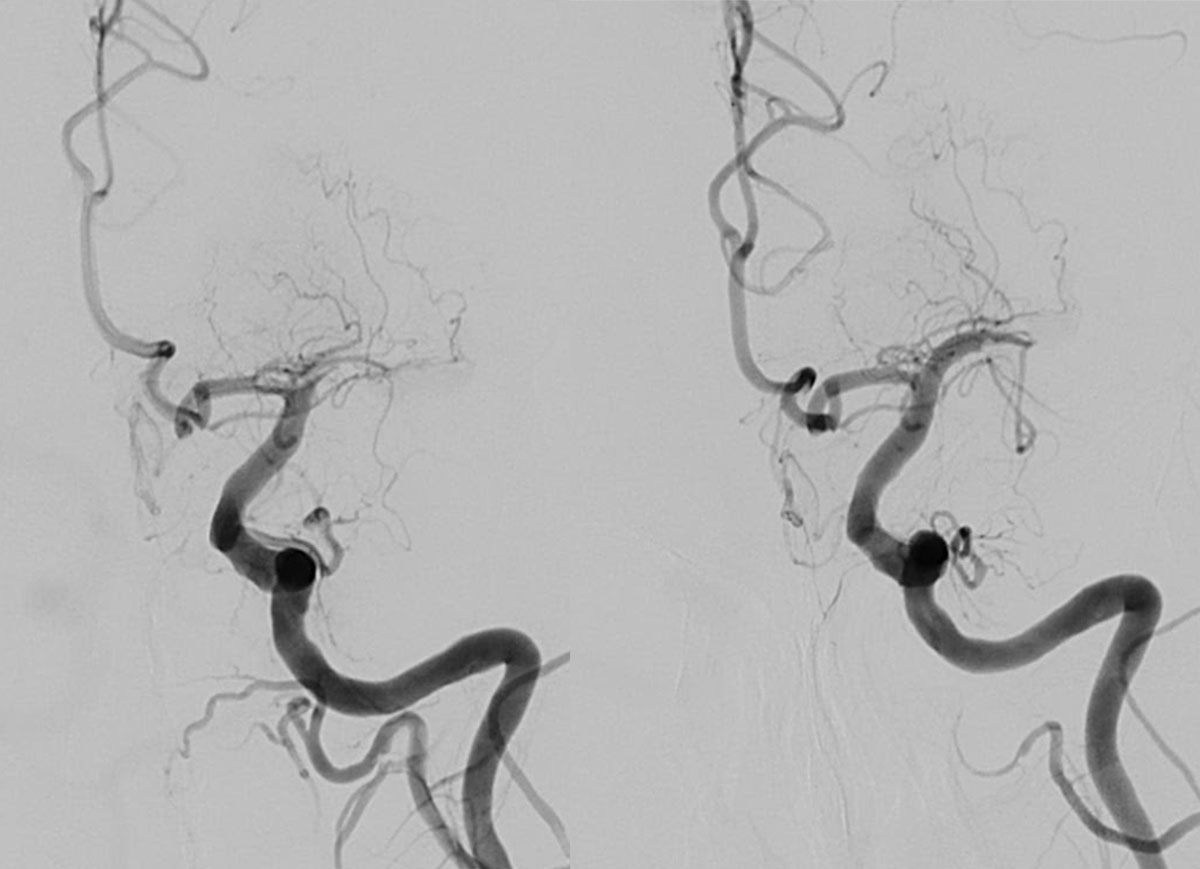
After first thrombectomy pass with combined technique (0.072” aspiration catheter and a 6x50 stent-retriever) the intracranial left ICA was successfully recanalized, but occlusion persists at the origin of the left M1 (left image). Then, three more thrombectomy passes were performed (combined technique with a 0.068” aspiration catheter and a 4x40 stent-retriever) failing to achieve recanalization (right image).
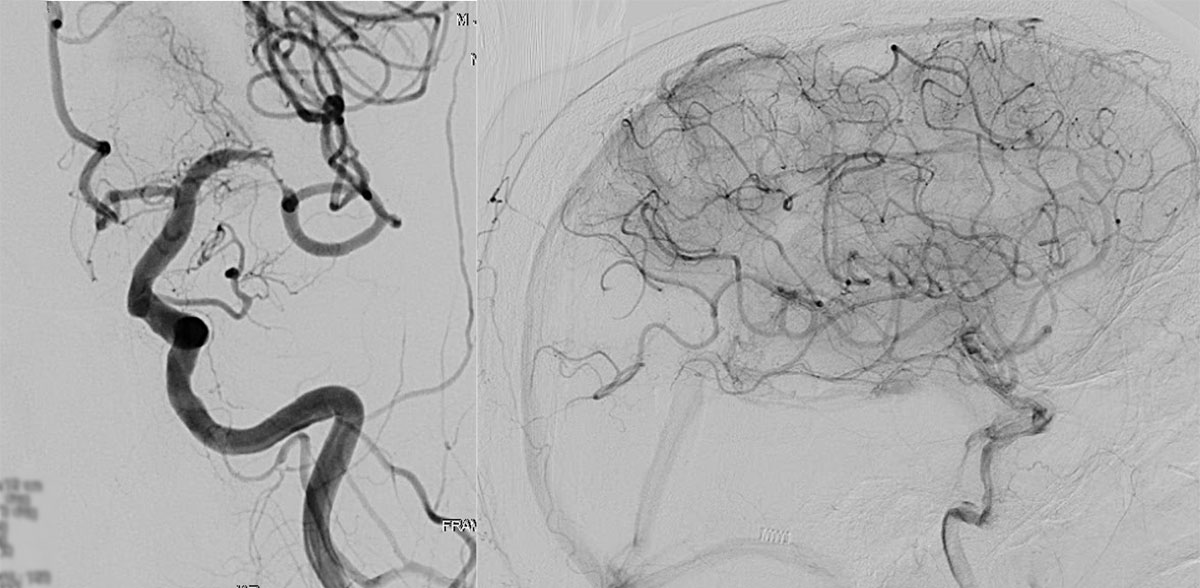
At that point, it was decided to temporarily deploy a 4x20 stent retriever throught the occluded segment and angiographically asses patency of the vessel. 900 mg of i.v. ASA were administered. Angiography in PA (left image) and lateral (right image) projection with the stent-retriever deployed showed reopening of the left M1 segment with slow, but almost complete angiographic filling of the MCA territory.
Finally, a decission was made to deploy a intracranial stent (pEGASUS 4.5x30 mm) after administering a bolus (40 ml) and a perfusion (15 ml/h) of intravenous antiplatelet agent (GP IIb/IIIa inhibitor; tifrofiban). Final angiogram in PA (letf video) and lateral (right video) projection showed succesful recanalization of the MCA territory (TICI 2c), remaing significant inta-stent stenosis in the left M1 segment.No stent was implanted in the cervical ICA.
What would you expect from this result?...
It's a disaster, the stent is going to occlude
The stent will remain open with that horrible stenosis and the patient won´t improve much further
We must trust in the force… the stent will open gradually
Evolution
The patient's neurological evolution was favorable, presenting a NIHSS score of 6 at 24 hours
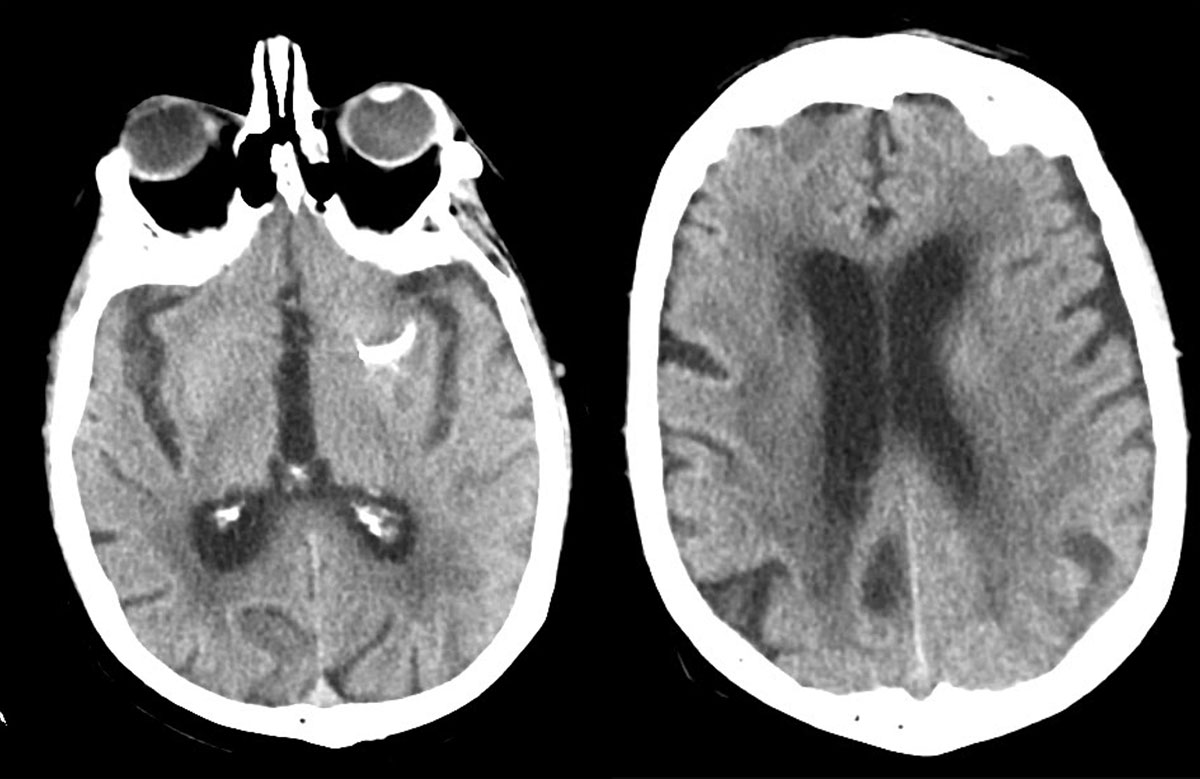
12 hours after thrombectomy a baseline brain CT scan and a CT angiography were perfomed…
Baseline brain CT: no intracranial hemorrhage of signs of established ischemia were seen
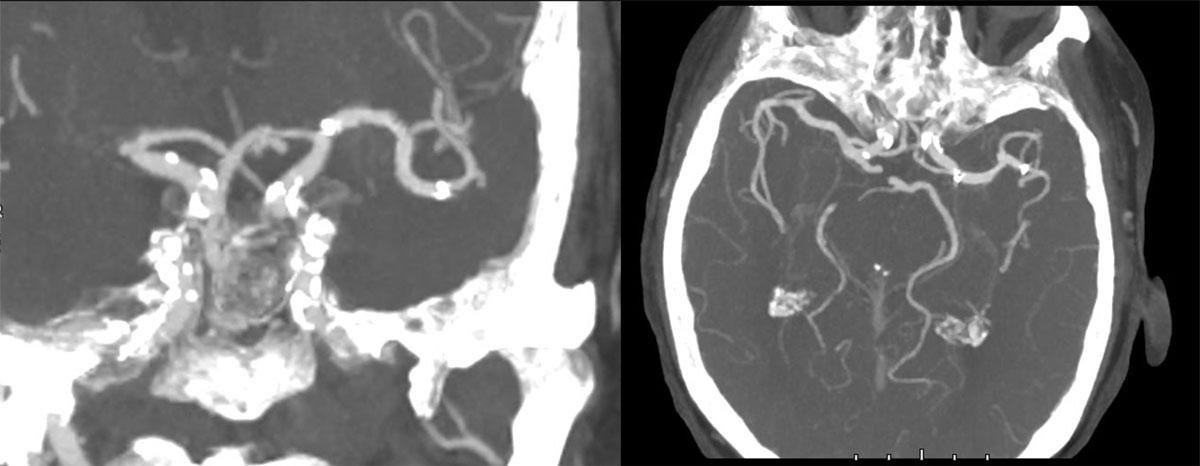
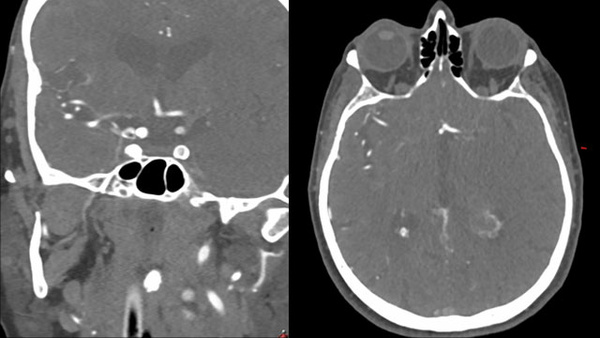
CT angiography: MIP reconstructions in the coronal (left) and axial (right) planes showed complete stent opening with recovery of the lumen of the previously occluded M1 segment
Evolution
Oral antiplatelet therapy was established (bolus of 300 mg of clopidogrel and 100 mg of ASA; then 100 mg of ASA and 75 mg of clopidogrel per day)
Patient's neurological symptoms improved favorably in the following days
He was discharged after 10 days with mild sensory loss of the left limb and right facial paralysis (NIHSS 2, mRS=0)
Conclusions
After four failed thrombectomy passes, the chances of recanalizacion with more passes are very low, and the complication rate increases
The lesion underlying the occlusion in this cases is probably a though clot or a intracranial stenosis
Intracranial rescue stenting is an effective alternative in certain cases of failed thrombectomy