Treating pulsatile tinnitus: current limitations
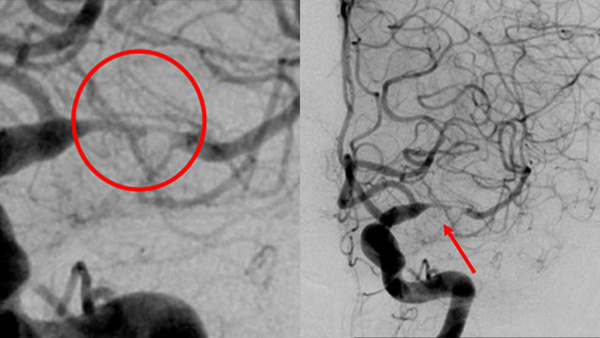
More than 80% of pulsatile tinnitus cases originate from venous sinus stenosis, an entity frequently embedded within the physiopathologic process of Idiopathic Intracranial Hypertension (IIH). While venous stenting shows excellent long-term efficacy, operators have historically been forced to use off-label carotid or peripheral stents. This lack of dedicated devices carries a major complication rate of up to 4%, alongside challenges like precise positioning, navigation through the sigmoid sinus, or patient pain caused by excessive radial force.
Viva Stent: a dedicated device to secure venous stenting procedures
To address these unmet clinical needs, the Viva Stent device introduces unique engineering features specifically optimized for the intracranial venous system:
- Smooth navigation: The stent is preloaded 5 cm distal to the tip, allowing smooth tracking through complex anatomy (such as the cranial base and septas) using a simple 6 French device.
- Precise control: A braided 19-wire design with optimized radial force that allows reach-accessibility and recapture/repositioning over more than 90% of its length.
- A less traumatic approach: It tracks over a standard .014 micro-guide wire, eliminating the need for an intermediate catheter and lowering bleeding or perforation risks.
To assess the safety and feasibility of the Viva Stent device in patients with venogenic pulsatile tinnitus secondary to transverse-sigmoid sinus stenosis, a prospective, multi-center, single-arm clinical study was launched. The primary safety endpoint evaluates major adverse events at 3 months (including target vein bleeding, thrombosis, new neurological deficit, or death), while the feasibility endpoint measures successful stent implantation and immediate post-procedural patency.