Come and join us across the globe
 Founded by Pr. Jacques Moret 
Sign In

“Slow-deconstructive” approach in a patient with acute stroke and fusiform MCA aneurysm

Last update on July 31, 2026

Discover how a "slow-deconstructive" strategy and tailored DAPT successfully treated a 45-year-old’s fusiform MCA aneurysm. A compelling look at managing embolic stroke risk when traditional vessel diameters are limited.

Case presentation

Patient situation

  • This 45-year-old patient presented with acute mild aphasia and facial palsy
  • MRA revealed an embolic stroke in the left inferior precentral gyrus, related to a non-ruptured fusiform MCA aneurysm in the Sylvian fissure
  • Her stroke-related neurological symptoms completely resolved under conservative treatment


Treatment chosen


DWI


TOF MRA

i.v. DCT


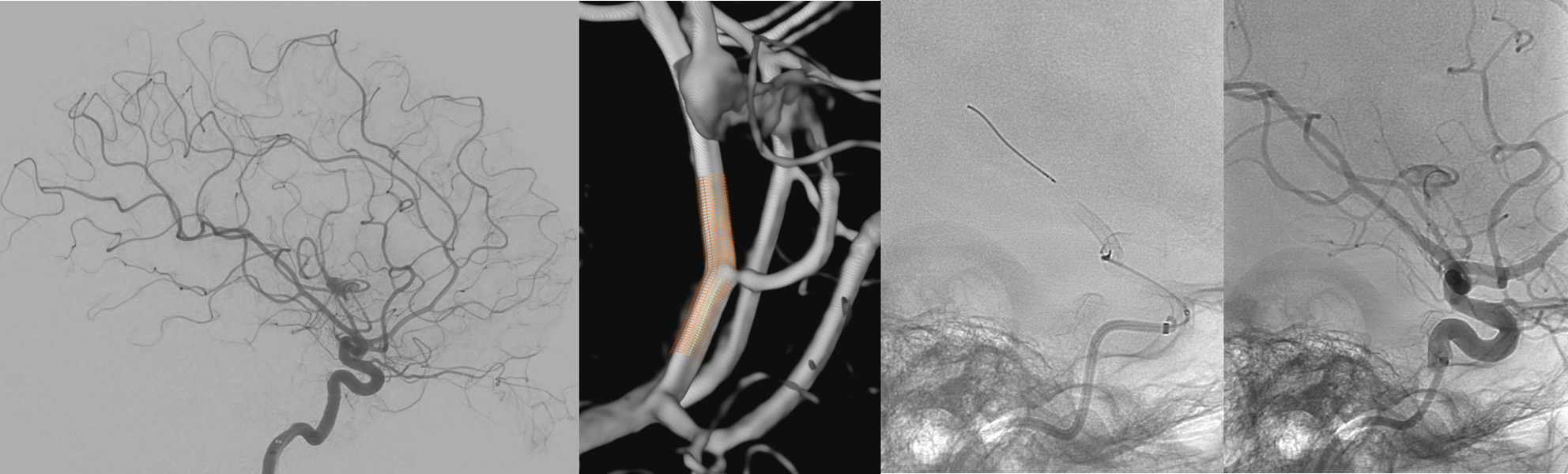
  • The left MCA fusiform aneurysm measured 13 mm; however, the carrier vessel diameter was below 1 mm
  • Treatment was initiated 6 months after the embolic event
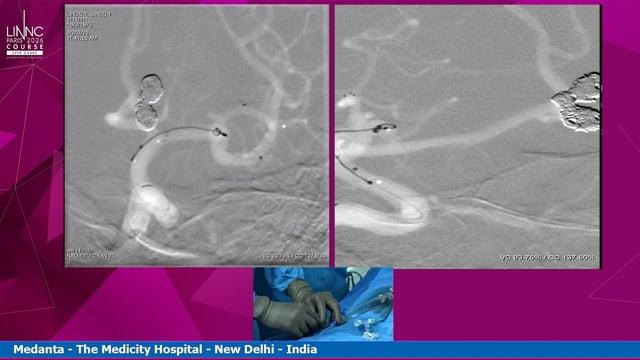
  • Indirect flow diversion of the origin of the carrier vessel under DAPT with aspirin and prasugrel was chosen


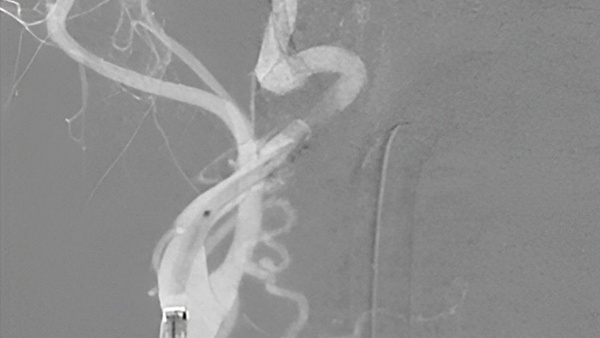
  • A Pipeline Vantage  2.5 x 10 mm Flow Diverter was deployed into the parietal M2-branch from which the carrier vessel arose.
  • The patient stayed under DAPT with ASS 100 mg/d and Prasugrel 10 mg/d for 3 months and prasugrel monotherapy for another 3 months


Follow-up (6 months)

Pre

Post (6 months)


  • MRA and i.v. DCT at 6 months confirming occlusion of the aneurysm and subtotal involution of the carrier branch. The patient had no symptoms and no new infarcts after treatment 


Results

  • Indirect flow diversion can be an option in peripheral cerebral aneurysms with low carrier vessel diameter
  • In this case, we used an aggressive antiplatelet regimen in order to avoid any further embolic events under flow diversion
  • No procedure-related complications occurred; there was no further embolic event after treatment, also confirmed by MRI
  • In the case described, the “slow-deconstructive” approach might be less risky than an endoluminal reconstruction of the diseased vessel
 

Supported by Medtronic

logo-medtronic
On the same subject
Come and join us across the globe
 Founded by Pr. Jacques Moret