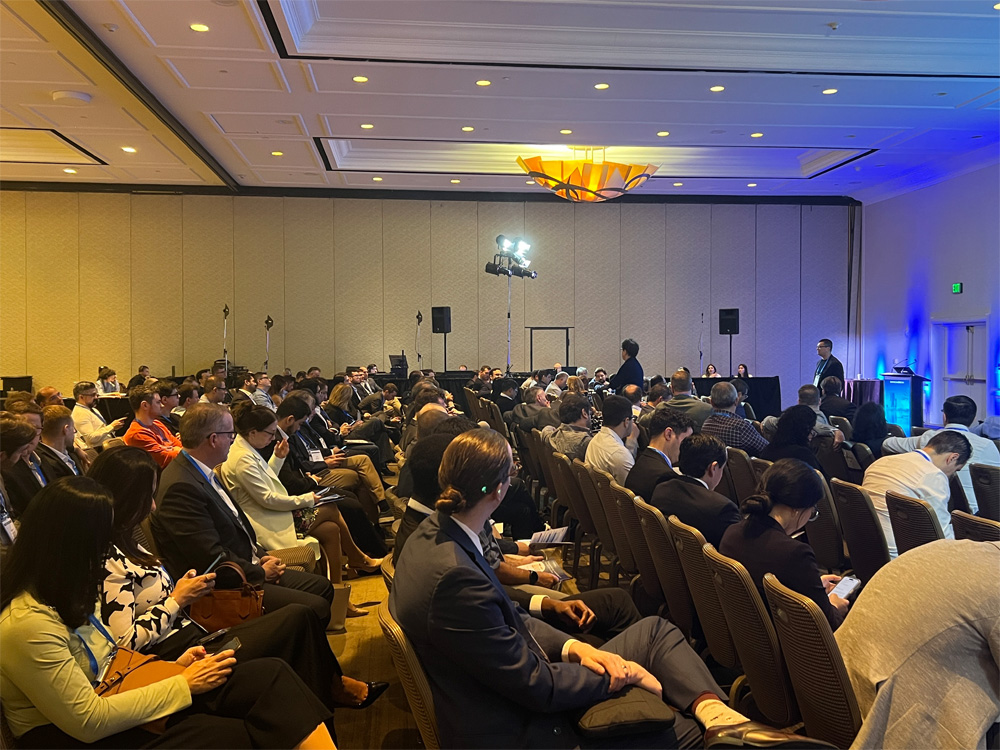
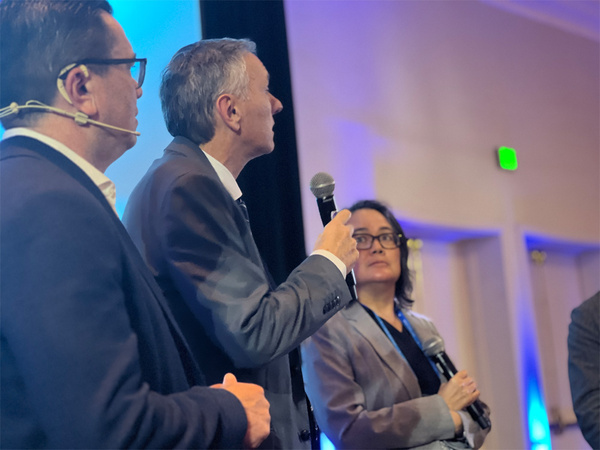
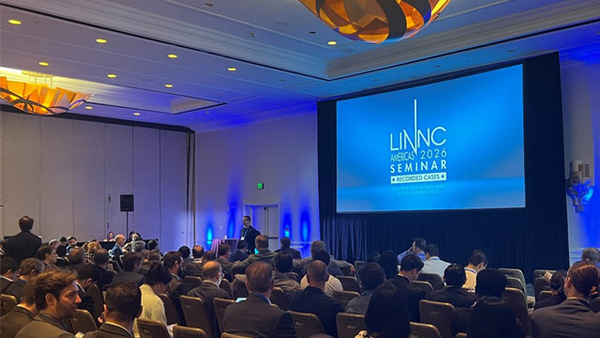
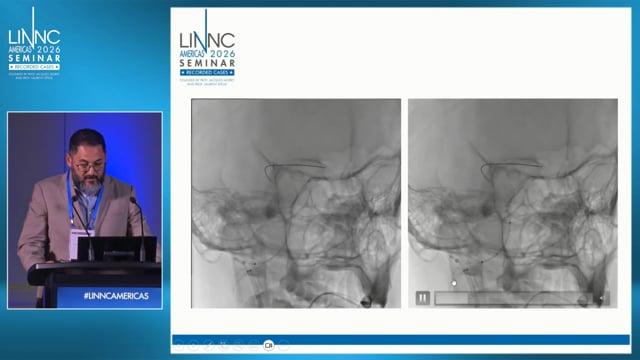
Day 2 of LINNC Americas delivered an exceptional spectrum of cases spanning complex aneurysms, challenging AV shunts, cutting-edge thrombectomy techniques, venous interventions, and a dedicated Pediatric Endovascular Masterclass. From elegant rescue strategies in ruptured aneurysms to staged treatments of neonatal Vein of Galen malformations, the day emphasized thoughtful planning, technical mastery, and multidisciplinary discussion. The cases reinforced a central theme: advanced technology is powerful, but outcomes are driven by anatomical understanding, procedural strategy, and real-time decision-making.
Complex Aneurysm Strategies: Flow Diversion, Intrasaccular Devices & Rescue Techniques
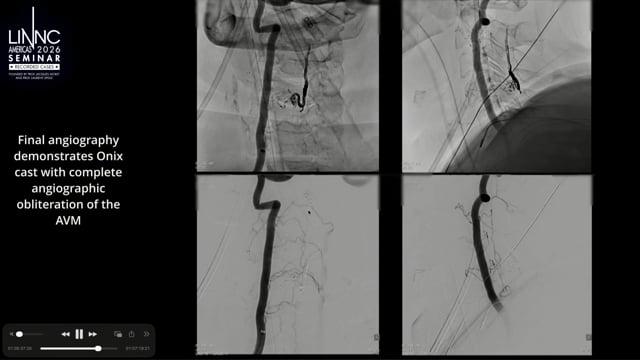
The morning opened with two “Best Case” presentations from attendees. Dr. Omar Kass Hout presented an atypical high-grade dAVF manifesting as severe spasticity, successfully treated with Onyx. Dr. Rodrigo Rodrigues followed with a dramatic giant basilar tip aneurysm complicated by perioperative rupture, rescued using a second WEB device in a kissing configuration with adjunctive stenting - an impressive demonstration of composure and adaptability.
ACom and Flow-Related Aneurysms
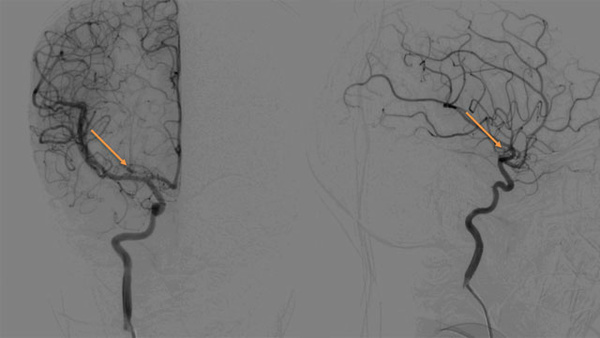
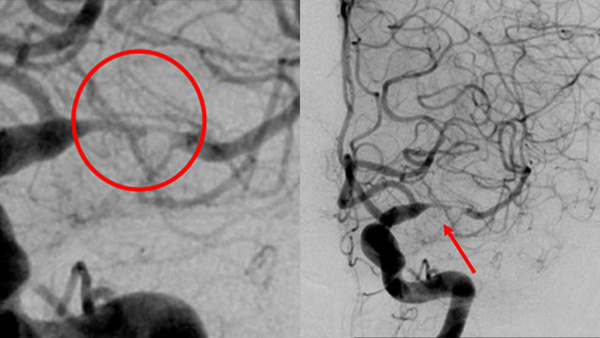
Prof. Vitor Mendes Pereira introduced a flow-related ACom aneurysm treated at Bicêtre by Prof. Laurent Spelle’s team using flow diversion. Elegant planning with Sim & Cure and Philips 3D software underscored the importance of pre-procedural simulation. Post-device evaluation proved critical when slow flow was observed in the covered A2 segment, successfully managed with IV Tirofiban, with improvement within 10 minutes.
Faculty discussion, enriched by Dr. Giuseppe Lanzino and Dr. Tudor Jovin, explored alternative flow diverter constructs and highlighted a key principle: addressing the hemodynamic source - in this case, a high-flow AVM - may be equally important
A second small ruptured ACom aneurysm was treated using a tilted WEB configuration. Faculty acknowledged that while intrasaccular disruption is a high-expertise approach, coiling (often balloon-assisted) remains a reasonable alternative. The consensus: “A difficult aneurysm is a difficult aneurysm.”
Posterior Circulation & Distal Challenges
Prof. Vitor Mendes Pereira presented an unruptured dissecting PICA aneurysm in highly tortuous anatomy, including a 180° loop. The Silk Vista Baby was deployed with excellent apposition despite challenging stability. In-stent stenosis at 6 months partially resolved at 1 year and completely resolved at 4 years - a reassuring long-term evolution.
Later, a small recurrent anterior choroidal aneurysm was treated with Pipeline Shield, achieving durable occlusion despite minimal neck coverage margins. A ruptured MCA aneurysm previously treated with WEB required rescue using FRED flow diversion after incomplete occlusion.
Prof. Laurent Spelle also presented a very small MCA aneurysm in a patient with HHT using the Contour intrasaccular device. Discussion focused on catheter selection - suggesting that a 017 microcatheter may offer improved navigability compared to a 021 in tight anatomy.
Dr. Ricardo Hanel concluded the aneurysm session with the Pipeline Shield PAS interim results - demonstrating high complete occlusion rates, excellent safety, and overwhelmingly favorable functional outcomes (mRS 0–2 in >98%) in over 100 patients at 1 year, reinforcing strong real-world performance.
Arteriovenous Fistulas & Complex Shunts: Anatomy Matters
AV shunts featured prominently throughout the day.
Dr. Martin Radvany presented a carotid cavernous fistula with cortical venous reflux treated via percutaneous inferior orbital vein access. His detailed review of orbital anatomy highlighted the importance of precise anatomical knowledge for safe alternative access.
Prof. Laurent Spelle presented a Cognard Type V duro-arachnoid fistula of the hypoglossal canal cured using liquid embolic from the ascending pharyngeal artery. Faculty emphasized the necessity of complete angiographic evaluation to identify eloquent territories and ensure safe reflux margins.
Two additional attendee cases included a pure intraorbital AV fistula treated with transvenous embolization and a PICA aneurysm case which evolved to a secondary tentorial dAVF. These cases reinforced the dynamic nature of vascular pathology and the need for vigilant follow-up imaging.
Stroke & Thrombectomy: Aspiration, Innovation & Technical Strategy
We had some great presentations on new technology in the EVT space. First, Dr. Dan Tonetti presented the ASCENT technique data, utilizing the Tenzing delivery catheter to advance the 088” HiPoint aspiration catheter into the ICA or MCA, achieving 60–65% first-pass success. Then after lunch, Dr. Santiago Ortega-Gutierrez presented stroke outcomes featuring the NeVa stent retriever.
Our LINNC co-directors then presented a proximal basilar artery occlusion treated with radial access and the AspiTriever technique, prompting robust discussion around pharmacologic adjuncts and mechanical strategy.
Prof. Vitor Mendes Pereira concluded the session with a quick and effective aspiration thrombectomy case from St. Michael’s Hospital, emphasizing streamlined workflow and technical precision.
Pediatric Endovascular Masterclass: Treating the Smallest Patients
One of the most inspiring sessions of the day was the Pediatric Endovascular Masterclass, led by Drs. Johanna Fifi and Flavio Requejo.
Before the Master session began, Dr. Luisa Borges de Souza presented a compelling case of a 9-month-old infant with a high-flow pial AVF treated using combined coil and n-BCA, resulting in significant neuropsychomotor improvement.
Dr. Flavio Requejo reviewed pediatric AVM subtypes and future directions, including intrauterine interventions and genetic therapies - referencing the zebrafish Vein of Galen model as an emerging research platform.
Master cases included a complex dural sinus malformation treated in two stages in a 12-week-old infant, a toddler with a pial AVF treated via combined arterial and venous approaches and a Vein of Galen malformation requiring five staged treatments from neonatal period to age one. A few teaching pearls included highlights that the femoral artery is only ~60% adult size at 4 years, making 4–5F introducers appropriate; careful DMSO dosing in small children to avoid toxicity; and strategic staging to allow physiologic maturation and weight gain.
Across glue, Onyx, arterial, venous, and combined techniques, the session demonstrated how pediatric intervention demands patience, anatomical precision, and multidisciplinary collaboration.
Venous & Other Unique Pathology
As our sessions were nearing completion in the afternoon, Prof. Vitor Mendes Pereira surprised us with an exciting case - endovascular stenting for jugular stenosis in a patient with pulsatile tinnitus and pressure gradient unresponsive to styloidectomy, which demonstrated symptom resolution post-stenting.
The best e-Poster was awarded to Dr. Jose Maria Curiel Zamudio for reporting incidental cerebral venous thrombosis during MMA embolization with Squid for chronic subdural hematoma - a reminder of vigilance even in routine procedures.
Closing Reflections
Day 2 of LINNC Americas highlighted the full spectrum of neurointervention - from neonatal AV malformations to complex flow diversion, from orbital venous access to aspiration thrombectomy innovation. The cases showcased not only technical excellence, but also the importance of hemodynamic understanding and anatomical mastery. The open faculty dialogue from the LINNC inspired many to learn new things this week, even our experienced course directors!
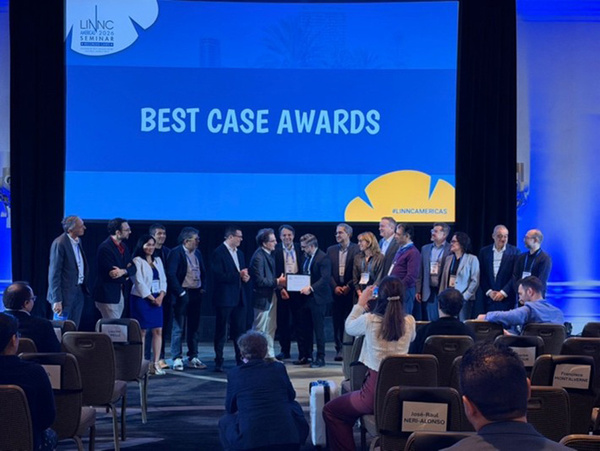
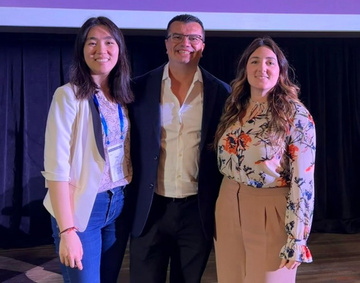
The afternoon sessions were concluded with an award ceremony to congratulate Dr. Keiske Yoshida for Best Presentation and Dr. Jose Maria Curiel Zamudio for Best e-Poster.
Thank you to our faculty, attendees, and global online audience for making Day 2 both educational and inspiring. The discussions were dynamic, the cases were bold, and the learning continues.
Reported by Nicole Cancelliere and Eileen Liu
Read the day 1 report