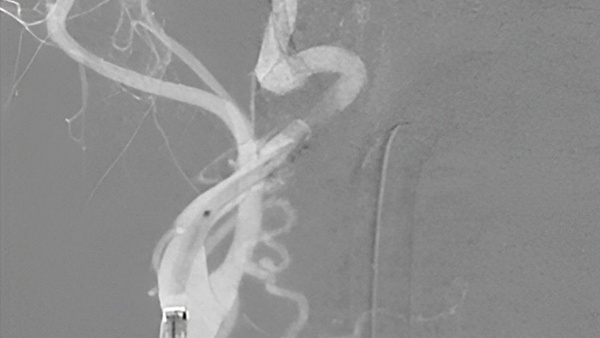
The video presents the case of a 27-year-old female with a ruptured giant saccular aneurysm in the mid-third of the basilar artery. The patient had a history of severe headaches associated with subarachnoid hemorrhage but no neurologic deficits.
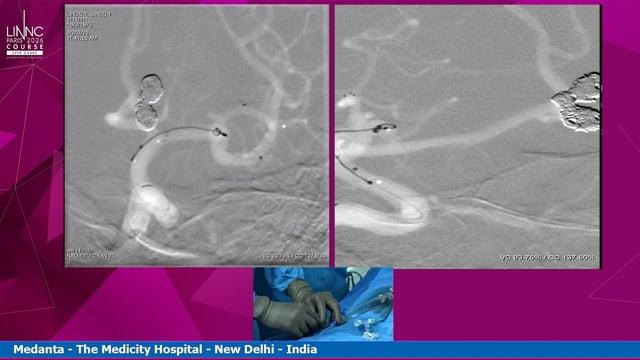
An initial first generation flow diverter was deployed, which caused complications including stent stenosis and distal luxation inside the aneurysm sac, resulting in an aneurysm remnant. A second endovascular intervention was performed with a telescopic placement of a second-generation flow diverter, restoring proper blood flow and vessel reconstruction. Follow-up imaging showed no ischemic events and improvement in mass effect.
The case highlights the challenges of treating complex vertebrobasilar aneurysms, the importance of device selection, and emphasizes careful consideration of endovascular nuances and collateral circulation.