Come and join us across the globe
 Founded by Pr. Jacques Moret 
Sign In

Therapy of a DAVF Cognard 2a: Transvenous embolization of a sigmoid sinus collector

Last update on May 14, 2023

Discover the case of a 72-year-old female patient with left-sided pulse-synchronous tinnitus and headaches. Upon examination, she was diagnosed with a Cognard type 2a dural arteriovenous fistula (DAVF). To treat it, a challenging transvenous embolization of the sigmoid sinus collector was performed via the contralateral cavernous sinus.

Case presentation

Patient presentation

  • 72-year-old, female patient
  • Left-sided pulse-synchronous tinnitus
  • Headache 


DAVF Cognard 2a

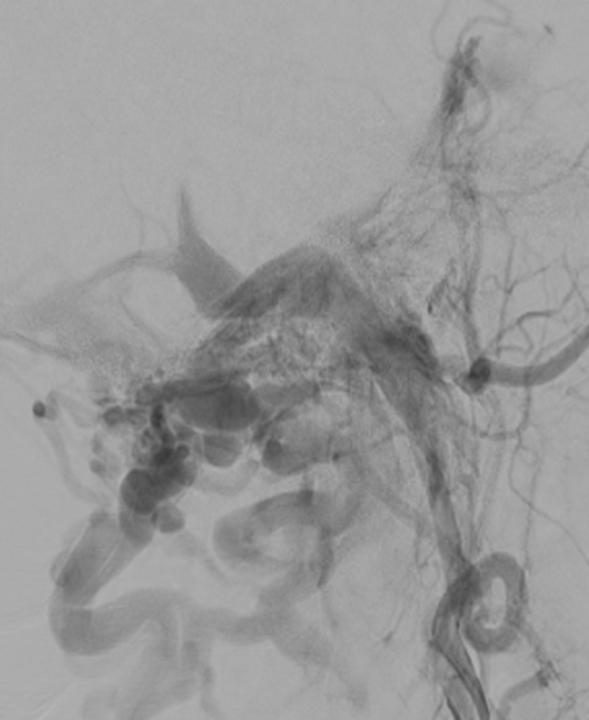
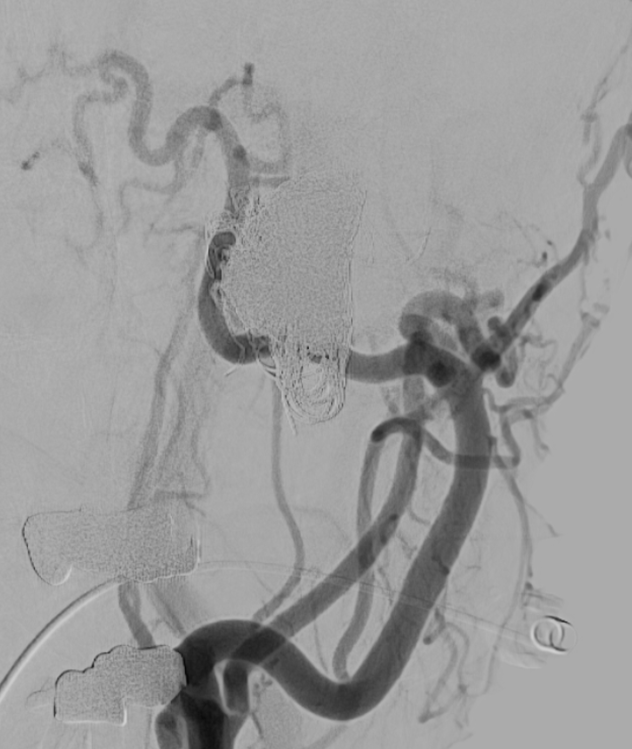
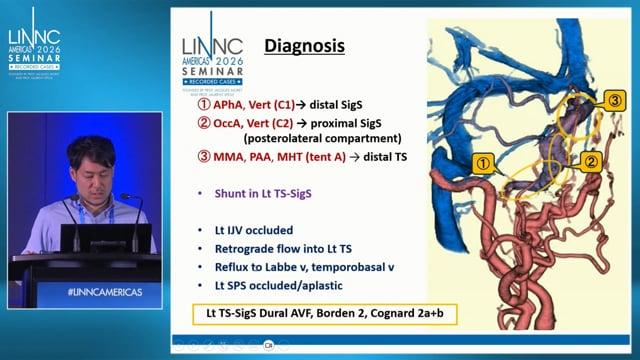
Feeder: racemous arteries of the left occipital artery and ascending pharyngeal artery

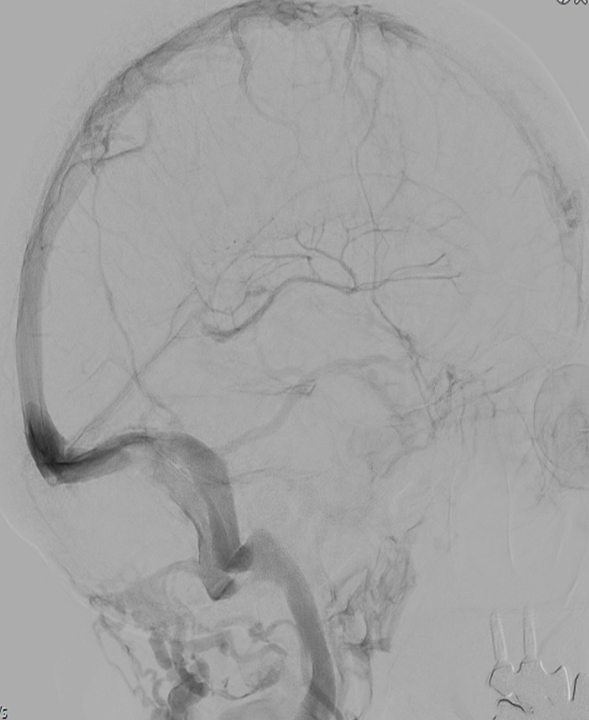
Drainage: left sigmoid sinus (distally thrombosed!), nuchal veins


Left-sided ECA injection (lateral projection)

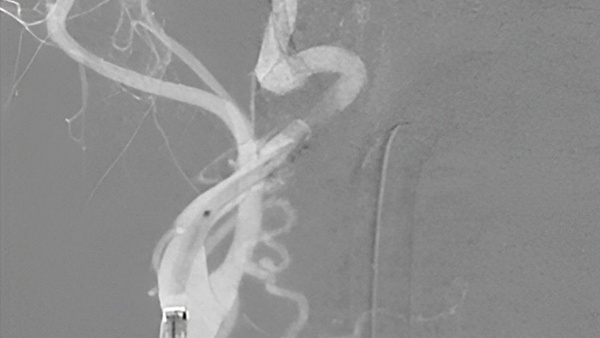
left-sided ICA injection (lateral projection)


Treatment chosen

  • Due to severe symptoms: endovascular treatment of the DAVF
  • Transvenous embolization of non-functional sigmoid sinus preferred (multiple feeders, avoid the risk of embolization of vasa nervorum)
Intervention

Intervention

  • Via right transverse sinus depiction of the left sigmoid-sinus-compartment draining the DAVF:
left-sigmoid-sinus-compartment-draining-davf

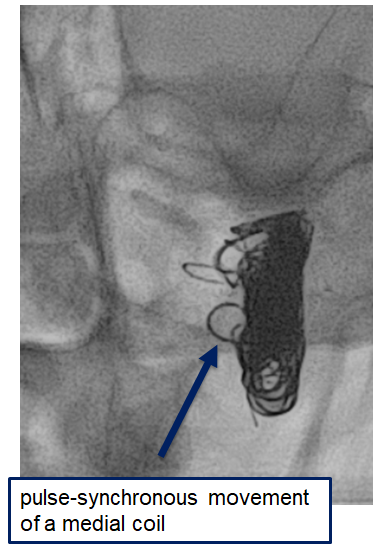
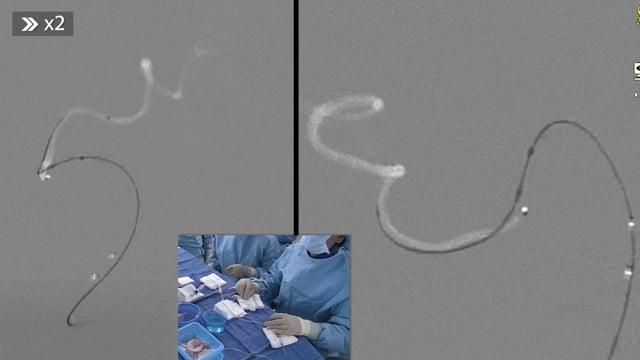
Coiling of the left sigmoid sinus

  • Post-coiling: still multiple feeders detectable


Left CCA-series (lateral projection)

X-ray


Post-coiling DSA


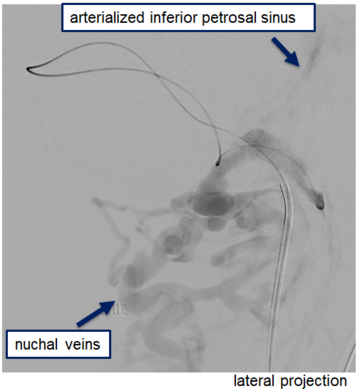
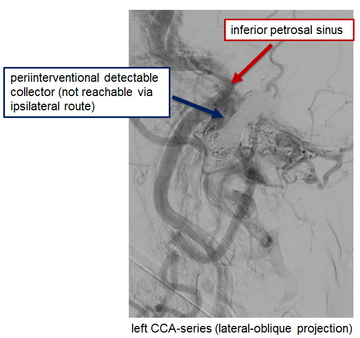
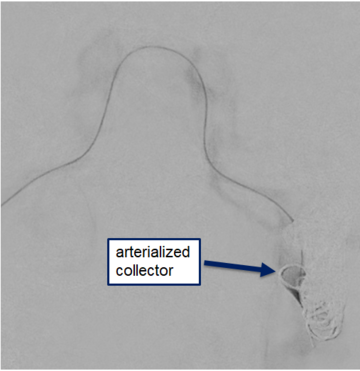
Arterialized sigmoid sinus collector

  • Drainage of the collector via the left inferior petrosal sinus


arterialized-sigmoid-sinus-collector


Route to left inferior petrosal sinus

  • contralateral cavernous sinus → intercavernous sinus → ipsilateral cavernous sinus


route-to-left-inf-petrosal-sinus


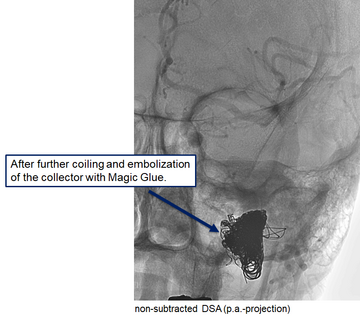
  • Microcatheter-injection confirms the location of the collector


coiling-embolization-collector-magic-glue


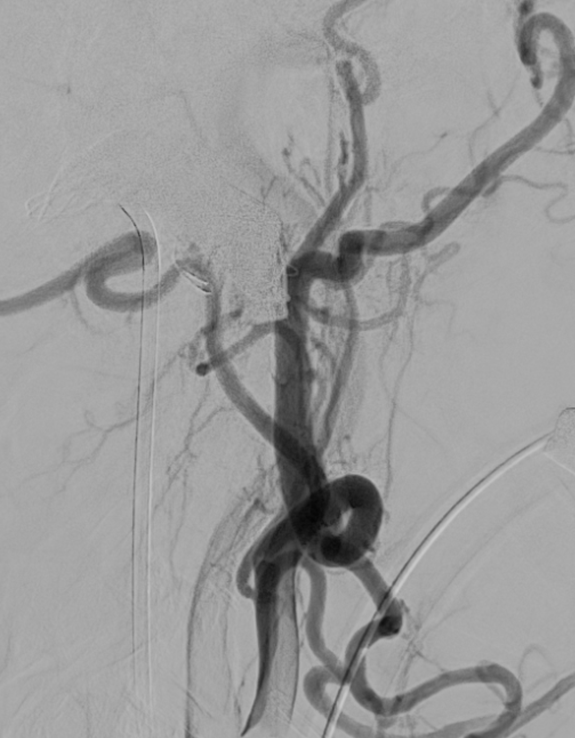
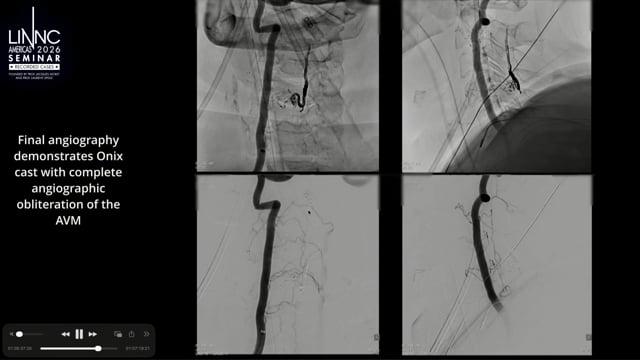
Complete occlusion of the DAVF

  • Left-sided ECA-series (lateral + p.a.-projection)


  • Complete regression of symptoms shortly after the intervention


Final control

Take-home messages

After supposedly save TVE:

  • Potential collectors might be inaccessible via the initial route
  • Possible upgrading of a DAVF when the collector is not occluded


Prior localization of collectors (which might be difficult)

  • Comprehension of anatomical positional relations to the collector
  • Planning of alternative, possibly more challenging routes


Embolization of the arterialized collector is crucial for DAVF occlusion!

On the same subject
Come and join us across the globe
 Founded by Pr. Jacques Moret