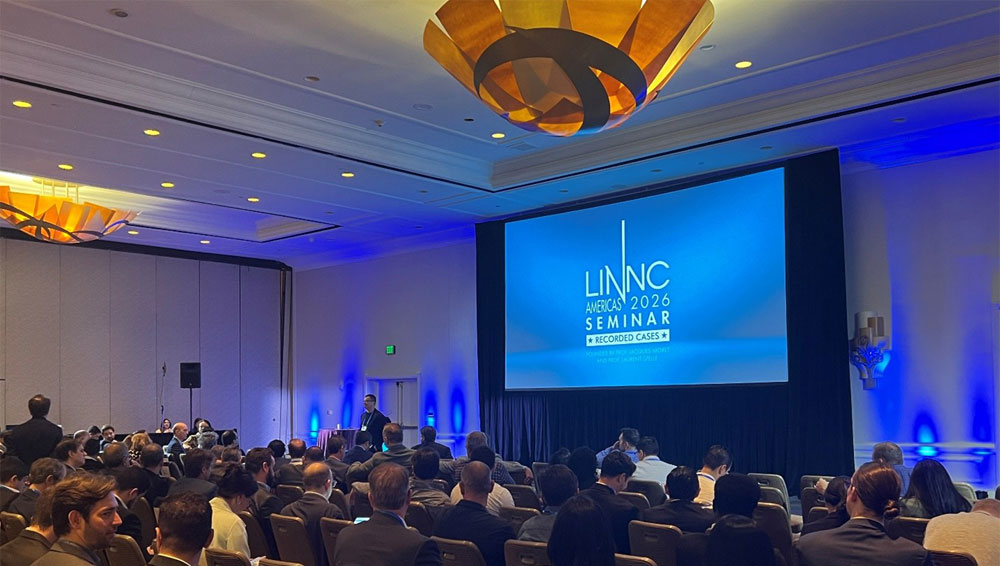
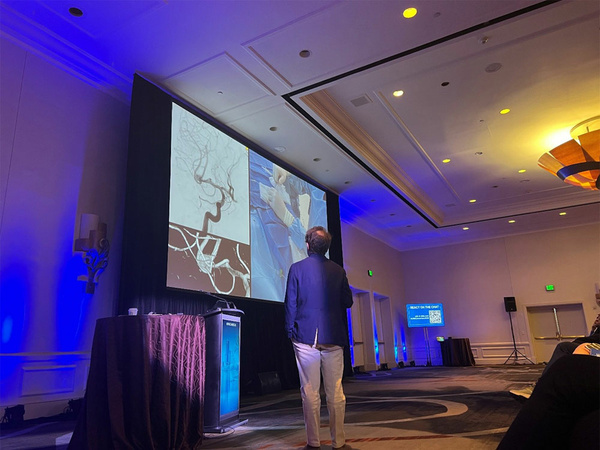
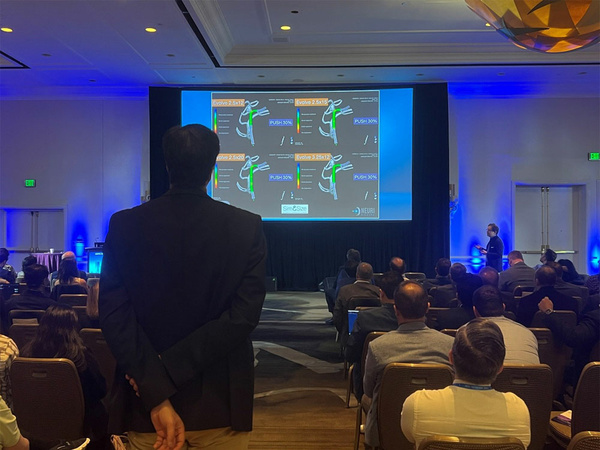
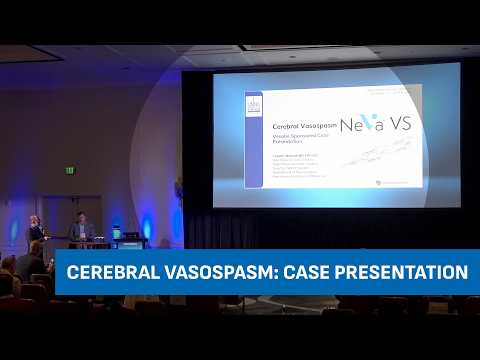
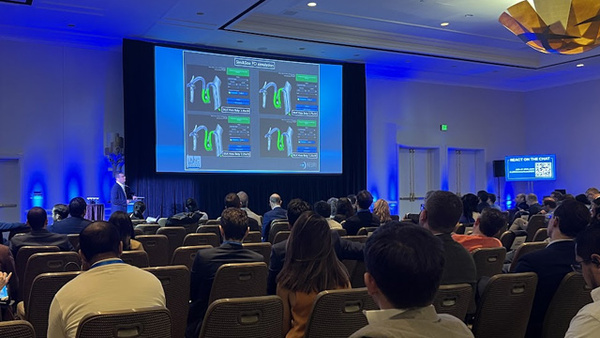
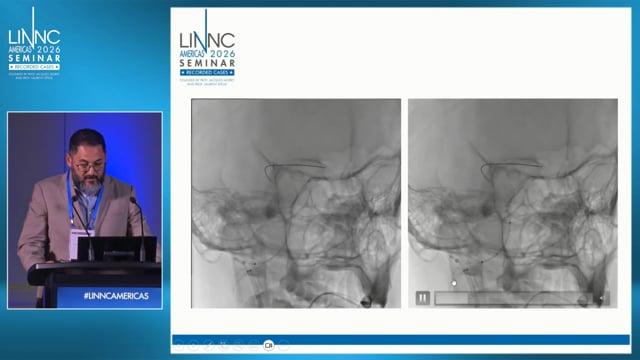
The first day of the LINNC Americas 2026 Seminar kicked off with high-intensity clinical debate and groundbreaking live case reviews. From the latest in intrasaccular flow diversion to the frontier of endovascular shunting for NPH, the Orlando edition is setting a new benchmark for neurointerventional education.
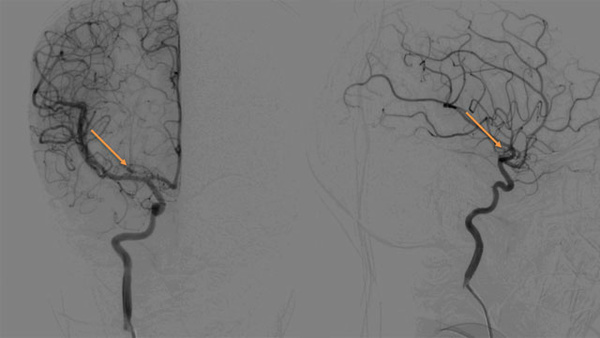
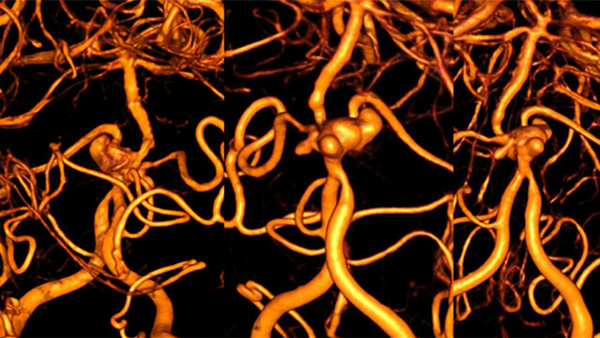
Prof. Spelle presented a challenging MCA bifurcation case in a 72-year-old patient. The morning sessions opened with a deep dive into a wide-neck aneurysm case. The discussion centered on the "no neck" anatomy where the neck is larger than the sac and the precise measurements required for WEB device sizing. Experts emphasized the value of 3D VasoCT and applying different views to ensure perfect apposition before detachment.
One of the day’s highlights was a dramatic rescue of a 46-year-old patient with a NIHSS of 27. Dr. Pereira showcased a complex "Y stent retriever" technique to address a tandem M1/A1 bifurcation occlusion. The session provided a masterclass in microcatheter navigation through tortuous anatomy, demonstrating how anchoring one device while deploying another can facilitate TICI 3 recanalization in even the most desperate clinical scenarios.
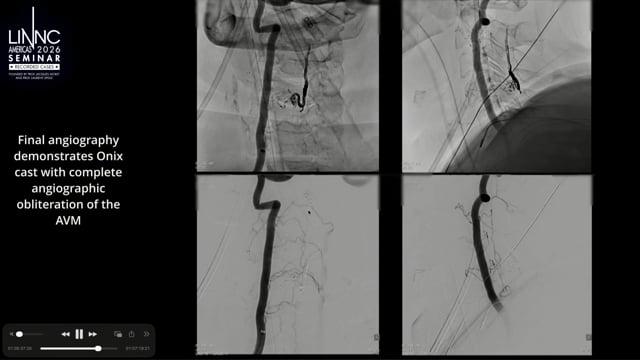
The seminar moved into specialized vascular challenges with a focus on spinal interventions and complex AVMs. Dr. Siddiqui presented a remarkable spinal AVM case, utilizing a pressure cooker technique and cardiac pacing to stabilize the liquid embolic injection. This was followed by a 54-year-old female case of a spinal dural AVF, emphasizing the need for meticulous microcatheter support and the use of the Sonic 1.2F system for distal access.
The program then shifted to focused technical sessions, which provided essential updates on the Surpass Elite Flow Diverter initial experience and strategies for advancing treatment beyond the neck for complex WNBAs. These technical sessions underscored the evolving landscape of flow diversion in increasingly distal and challenging anatomies.
The session on de novo and dysplastic aneurysms featured a 47-year-old male with a pericallosal aneurysm treated with an Evolve flow diverter, as well as a 58-year-old male with a basilar artery fenestration aneurysm. The latter required a sophisticated strategy of flow diversion on the dominant side combined with vertebral artery occlusion to secure the dysplastic segment. Expanding the endovascular frontier, the eShunt system for NPH was a major focus.
The case of a 74-year-old male demonstrated the precision needed to puncture the dura from the venous side into the subarachnoid space.
Chronic subdural hematoma management was highlighted through a 65-year-old patient undergoing MMA embolization. Using the nBCA glue kit, the case demonstrated how controlled reflux can effectively anchor the microcatheter tip and allow for deep penetration into the hematoma capsule.
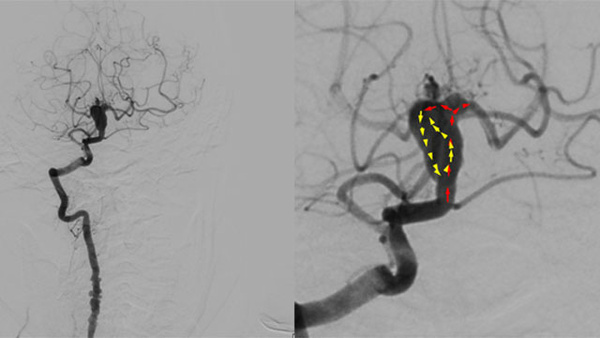
The day also addressed emergency reconstructions, such as a 48-year-old female with an acute ICA dissection. The case illustrated the use of pipeline shield technology and wall stents to reconstruct the vessel after a failed initial medical response, showcasing the role of intervention in acute stroke prevention.
True to the LINNC spirit, Day 1 did not shy away from the "Abyss." The complications session featured a candid review of a periprocedural rupture during an Acom WEB placement. The teaching point was profound: the WEB device itself, even when partially protruding into the subarachnoid space, served to seal the leakage and stabilize the patient.
In a celebration of the next generation of specialists, the day featured a series of Best Cases submitted by young practitioners. From a large pool of high-quality submissions, the most educational and technically challenging cases were chosen for presentation. These cases sparked lively discussion among the faculty and provided invaluable lessons on everything from pediatric neurovascular management to the identification of rare dural AVFs.
Stay tuned for Day 2, where the focus shifts to further deep dives into neurovascular innovation and upcoming symposiums.
Reported by Nicole Cancelliere and Eileen Liu
Read the day 2 report