Structural advancements and streamlined sizing
The transition to the new-generation Surpass Elite® Flow Diverter introduces significant structural engineering changes that directly alter implant behavior. Unlike surface modifications, the increased braid angle of the device natively minimizes foreshortening.
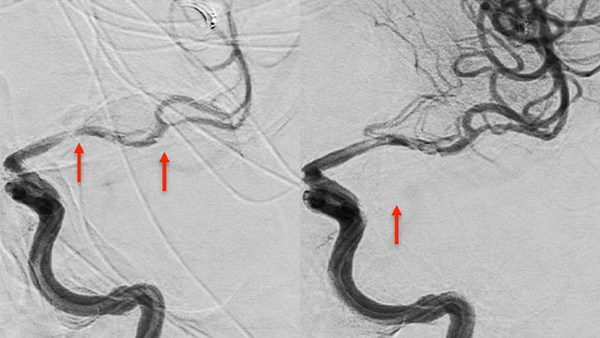
Emanuele Orru emphasized a crucial paradigm shift for early adopters: the device is engineered to fit the largest vessel segment, as it is designed not to expand significantly beyond its nominal value. Sizing to the largest segment removes clinical guesswork and simplifies the deployment workflow. This predictability correlates with excellent conformability and wall apposition when navigating tight vascular bends, significantly reducing the need for advanced rescue maneuvers to correct non-opening segments or ribboning.
Real-world data, practice variations, and safety signals
The Elite Real study features a highly heterogeneous patient cohort across international sites (including California, Korea, and Ireland), capturing real-world clinical variations:
- Angioplasty frequency: While institutional practices vary, the registry recorded a 20–22% angioplasty rate. Experts note routine post-dilation is low risk and microscopically enhances wall apposition.
- Adjunct coiling: Coil usage sat at 10% in the global registry (often reserved for large or giant aneurysms) compared to over 90% in specific UK practices, showcasing distinct therapeutic strategies.
Despite these practice variations, aggregate early data showed an adequate occlusion rate approaching 90%. On the safety front, the results are overwhelmingly positive, demonstrating a very low percentage of in-stent stenosis and no device-related complications. As the core lab finishes independent adjudication, upcoming subgroup analyses will investigate performance across small versus giant aneurysms, alongside a separate data set dedicated to ruptured aneurysms.