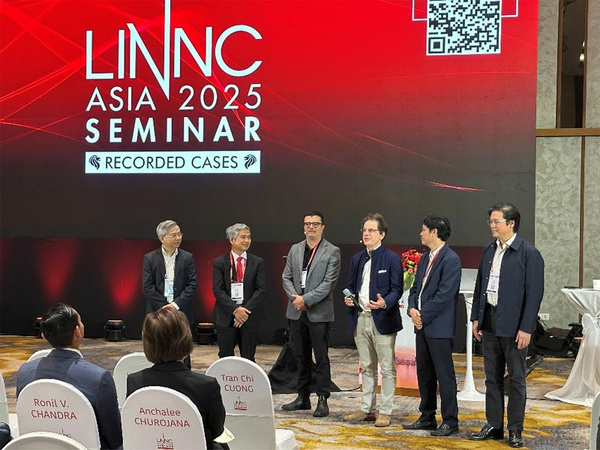
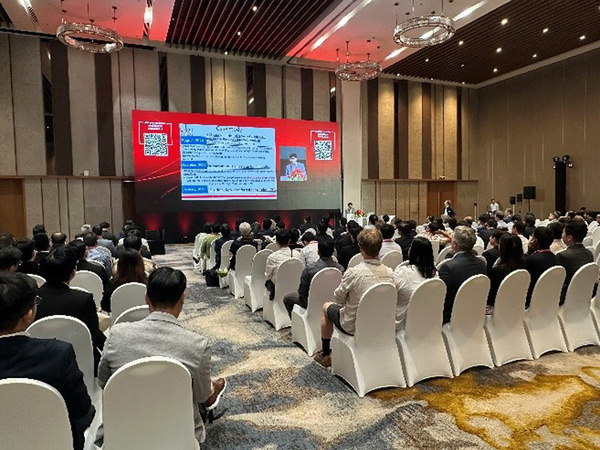
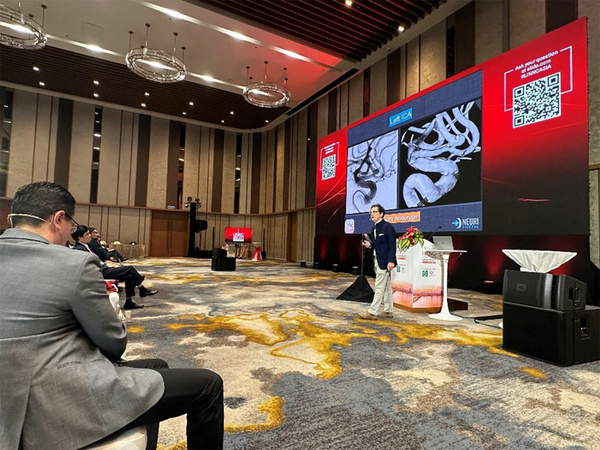
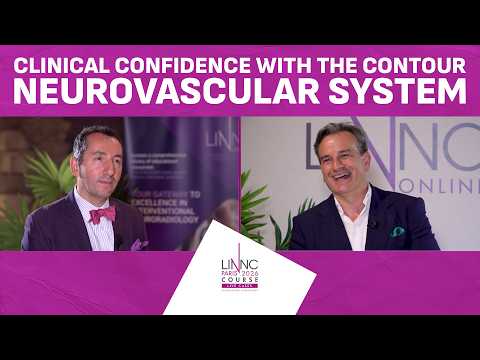
The conference starts off with a warm welcome from Laurent Spelle and Vitor Mendes Pereira and local course directors Dang Luu Vu and Tran Chi Cuong.
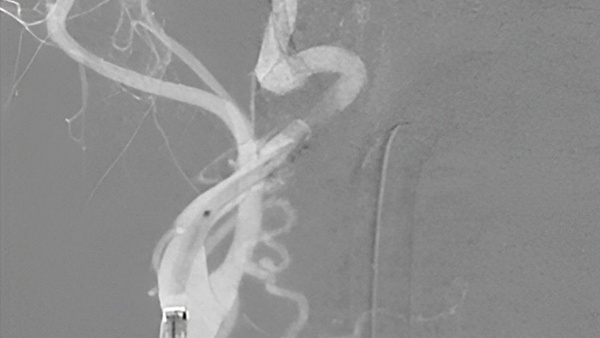
The first session was by Siriprapa Monsathaporn from Mahidol University, Thailand. She presented rare cases of cerebrovascular injury with retained foreign bodies, the first case being a harpoon dissecting a vertebral artery.
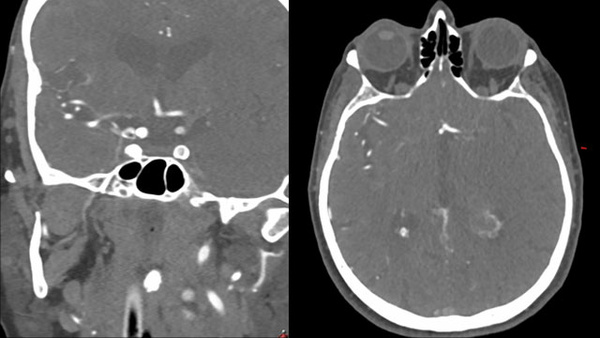
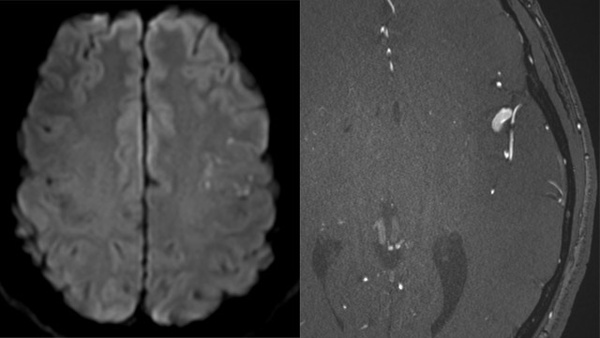
The next case from our attendees was from Virag Shetna who presented a floating thrombus in a possibly dissected vertebral artery causing a stroke in a young male.
The pathology was treated with flow diversion, and no stroke recurrence occurred.
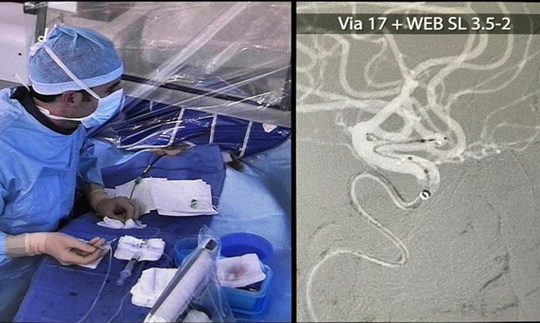
Laurent Spelle and Vitor Mendes Pereira followed with a recorded case of a small ruptured anterior communicating artery aneurysm with a 3.5mm x 2mm WEB device.
They emphasized that the device was placed without antiplatelets because of its ruptured state.
Despite there not being any stasis in the aneurysm, Laurent Spelle reiterated that there is no correlation between stasis in the aneurysm and eventual occlusion state. This phenomenon is well observed in this patient, where the final run still showed aneurysm filling but cross sectional imaging after the procedure showed that the aneurysm was fully occluded.
The next case involved the treatment of a small left middle cerebral artery aneurysm. Laurent Spelle emphasized that the VIA 17 is a stiffer microcatheter meant for delivery of the WEB and may be difficult to use for acutely angled access to small aneurysms. He repeatedly emphasized this point throughout the case—re-evaluation of selected devices is key in all aneurysm treatment.
After the break, Vitor Mendes Pereira started the late morning session with a Vein of Galen Malformation case in a 4.5-month-old child. Laurent Spelle masterfully demonstrated Scepter mini balloon assisted embolization of the fistula with a liquid embolic. The case also emphasizes the importance of heparinization to avoid thromboembolic complications.
Next, we moved on to flow diversion of a recurrent pericallosal aneurysm. The challenge in this case was to choose which branch the flow diverter should go into. A single Silk Vista Baby was enough to encourage thrombosis in the previously coiled aneurysms.
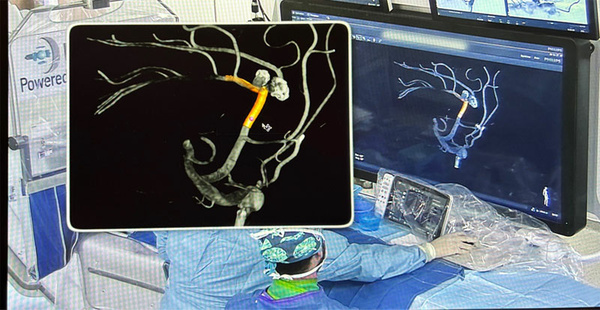
During the Q and A, Laurent Spelle talked about his experience with a simulation software. While he uses the software routinely now, he explained that it is there as a guide much like a map to a new city like Da Nang!
Rashmi Saraf presented the first industry sponsored symposium, on the Silk Vista by Balt. She presented her own series using both the “baby” and the “mama”.
Moving back to the attendee presentations. Mai Van Muong presented a case of venous thrombectomy for deep cerebral venous thrombosis. Despite initial bithalamic lesions, the patient had a fantastic recovery with no significant persistent deficits. We then followed with a case from Bicetre of a bilobed anterior communicating artery aneurysm. After attempting to coil the aneurysm, Laurent Spelle decided to go with flow diversion using a Pipeline Vantage stent. Neointimal hyperplasia developed initially but regressed over time.
Before going into our lunch break, James Caldwell talked about the the WEB device by Terumo Microvention. He went over the basics of its use showed interesting cases including the use of stent along with the intrasaccular device.
After lunch, Vitor Mendes Pereira presented a case of an M2 thrombectomy case with mild symptoms. They used a 4mm x 20mm Trevo stent retriever to obtain the clot and attain recanalization after 2 passes. This case led to a very lively discussion on whether or not we should still be doing distal occlusions for stroke. Laurent Spelle followed with an MCA aneurysm treated with the Artisse device.
Going back to our attendee presentations, Quang Anh Nguyen, presented his case on management of a flow diverter with an unopened segment. It was a nail-biting saga of a malpositioned stent that had a good outcome in the end. The case emphasizes the importance of consulting your colleagues when you’re in a difficult situation.
Back to our recorded cases, Laurent Spelle showed a case of a small left A1 aneurysm. Throughout the discussion he emphasizes that the indication for treatment should always be re-evaluated especially in small aneurysms.
We then moved to an industry sponsored symposium by Medtronic, where Ricardo Hanel spoke about the Pipeline Shield registry with 237 patients, demonstrating an 84.6% (88/104) occlusion rate of treated aneurysms at 1 year. Then Thai Binh Nguyen demonstrated his expert use of the Pipeline Flex with Shield.
For the last industry-sponsored talk of the day, Dang Luu Vu, one of our local course directors, talked about the Philips angiography angiosuite, and more specifically about how the features of the machine, such as the Vaso-CT, assists operators in making intraprocedural decisions.
We now go to the most exciting part of the LINNC conference, the complications session. Tran Chi Cuong showed a difficult case of a ruptured aneurysm with a coil migration causing a stroke. Dang Luu Vu followed with an ischemic complication associated with a catheter rupture during AVM treatment.
Laurent Spelle shared a complication involving an M2 stroke presenting with aphasia. He went into his philosophy of ensuring vessel occlusion for intraprocedural ruptures. We end the day with a ruptured tectal AVM complicated with intraprocedural rupture.
Reported by
Jose Danilo B Diestro
Read the day 2 report