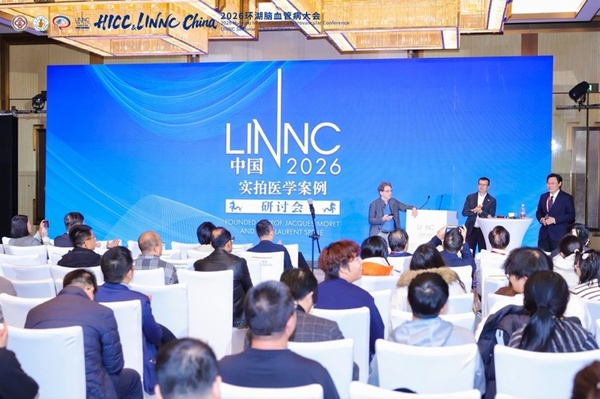
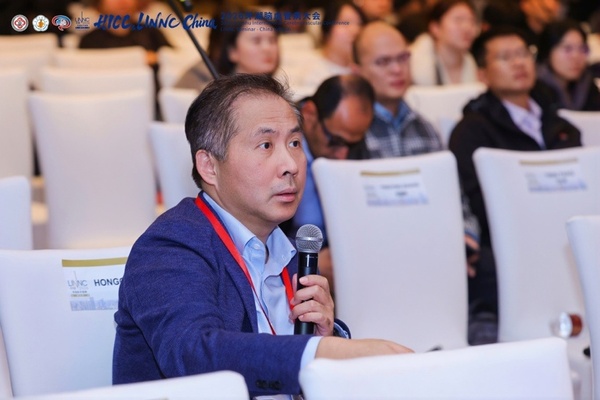
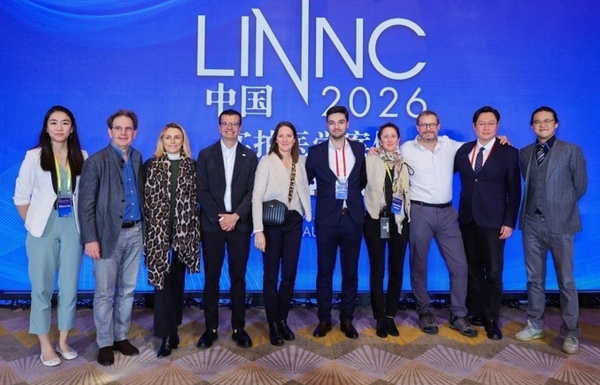
The second day of LINNC China 2026 put strategy at the centre, as recorded cases from Bicêtre, Toronto and Tianjin were discussed step by step by the faculty.
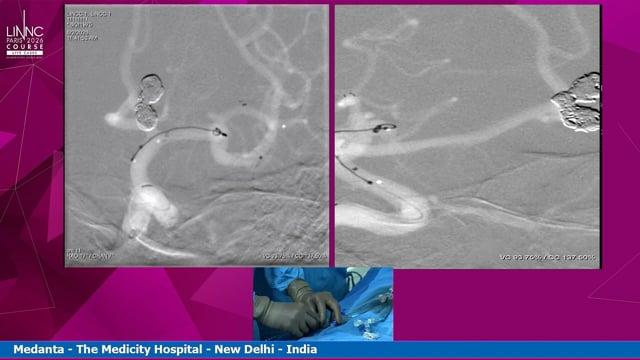
The day opened with a small, irregularly shaped aneurysm at the origin of the left A1.
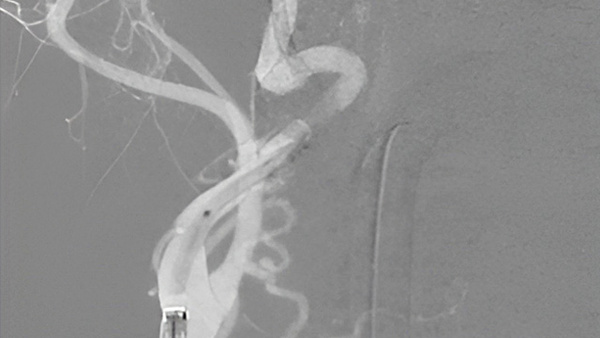
Coiling was considered risky, so the Bicêtre team chose remote flow diversion with a FRED placed from the left M1 to the ICA terminus, showing how better devices can turn a challenging aneurysm into an easy treatment. The case animated the discussion on deployment technique, the change in flow balance at the anterior communicating complex, and the design of the FRED, whose non-flow-diverting ends may help spare perforators.
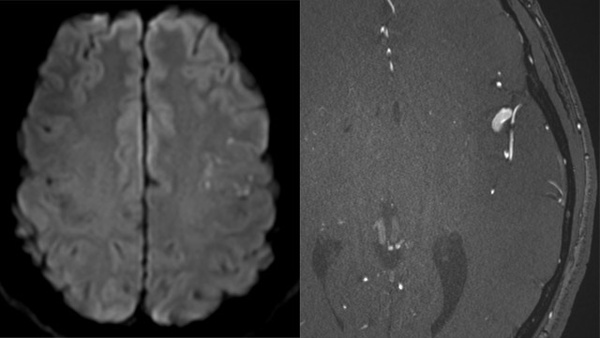
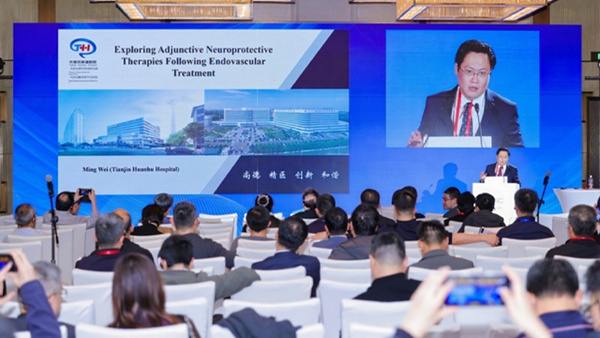
The second case, a distal M2 occlusion treated with thrombectomy, opened the debate on MeVO. Faculty agreed that distal thrombectomy should be performed in maximal safety conditions, under general anaesthesia, and that MeVO patients with low and high NIHSS should be considered separately. Prof. Ming Wei added that intra-arterial thrombolytics can be a solution in selected patients.
Prof. Qiang Jia from Tianjin Huanhu Hospital then presented two ruptured blister aneurysms treated with flow-diverter-assisted coiling. These complex lesions have a high risk of rebleeding, and the discussion showed that strategy depends on each centre’s experience: open surgery, flow diversion with coiling, or multiple flow diverters can all be options. For now, there is no consensus on how to manage these challenging cases.
Staying with flow diversion, at the Medtronic symposium Prof. Liu Jian from Beijing presented Chinese data on the Pipeline Shield, where a propensity matched cohort showed fewer thromboembolic and haemorrhagic events compared with the previous generation.
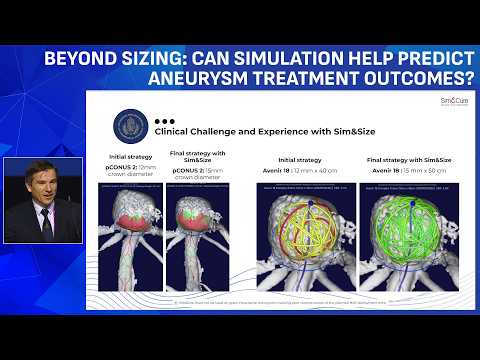
The next recorded cases focused on MCA bifurcation aneurysms, with two cases showing different approaches to the same challenge. The first, an ultra-wide neck aneurysm with branches arising from the sac, was treated with Y stenting and coiling. An intraoperative rupture was sealed immediately by continuing to coil. Discussion compared Y stenting with WEB and flow diversion, and highlighted practical tips for braided stents, such as anticipating foreshortening and using a small microcatheter to control kickback. The second, a wide neck, shallow bifurcation aneurysm, was treated with a flow diverter, where simulation software helped sizing. Faculty discussed antiplatelet duration at bifurcations and the possible slow occlusion of the covered branch.
At the Balt symposium, Prof. Ren and Prof. Gao from Tianjin shared their experience with the SONIC detachable tip microcatheter in AVM embolization, focusing on microcatheter entrapment. Prof. Laurent Spelle and Prof. Vitor Mendes Pereira led a lively discussion on the key features of the detachable segment and on tips and tricks to avoid and manage microcatheter entrapment.
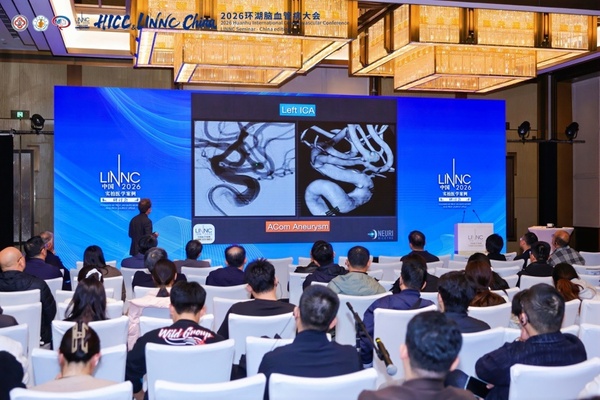
After lunch, Prof. Vitor Mendes Pereira presented a patient with an acute stroke caused by a long dissection of the internal carotid artery, reconstructed with flow diverters. Prof. Naci Koçer then led the discussion on how dissection treatment has evolved with new devices, from coronary stents to braided stents and now flow diverters. Next, Prof. Laurent Spelle showed a very small ruptured anterior communicating artery aneurysm treated with a WEB, with excellent results at 5 years. Faculty concluded that the younger generation should master every technique, including balloon remodelling, and not rely on a single device.
This was followed by an osteodural arteriovenous fistula of the condylar canal in a patient with pulsatile tinnitus. The treatment, performed by Prof. Jacques Moret, showed the importance of adapting the strategy during the procedure, as the initial plan had to be changed. The key messages were to know the dangerous anastomoses, to control the liquid embolic agent, and to adjust the plan continuously. Prof. Ming Wei followed with a similar skull base fistula, cured by transvenous embolization with coils and Onyx, confirming the value of a jailed microcatheter for liquid embolic injection.
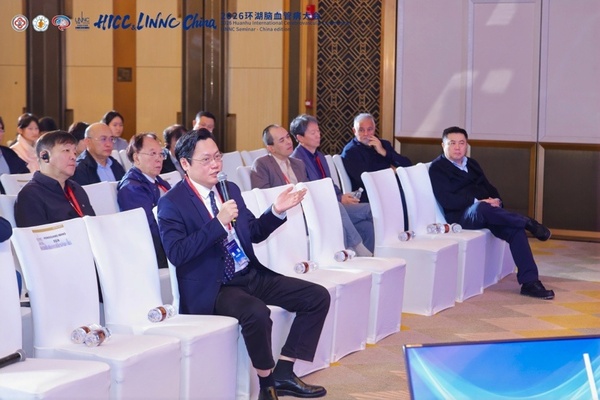
The complication session, The Dark Side of INR, was one of the most followed of the day, with a full room and lively discussions. The cases illustrated haemorrhagic complications, and faculty discussed how to manage them in practice: stay calm, keep the microcatheter in place to seal a perforation with coils or glue injected slowly, and carefully control reflux when injecting liquid embolic agents in small vessels.
Prof. Vitor Mendes Pereira then presented one of the highlights of the day: a large paraclinoid aneurysm treated with coiling and flow diversion, followed with intravascular OCT. The Toronto team showed what the future of endovascular imaging may look like, with OCT used to measure the area of the neck not yet covered by endothelium and to study the vessel wall around the device. Faculty underlined how much this could teach us about the reaction at the interface between the artery and the stent, and about the wall of fusiform aneurysms.
The last session opened with a cervical spinal dural arteriovenous fistula from Bicêtre, treated by Prof. Laurent Spelle. Navigation was challenging, and the case showed the value of a balloon as support for catheter navigation in complex situations, before the fistula was cured by a single injection of liquid embolic agent.
Prof. Hongqi Zhang then led a discussion between surgery and endovascular treatment, highlighting the importance of understanding the exact location of the arteriovenous shunt.
The final case from Toronto brought the discussion back to acute stroke, with a thrombectomy performed using a large bore aspiration catheter. The debate centred on large bore catheters and the potential of cyclic aspiration.
Farewell from Tianjin! Over two days, the meeting showed that the most valuable lessons come from open discussion, shared experience and honest analysis of complications. See you at the next LINNC China!
Reported by Dan-Adrian Popica
Read the day 1 report