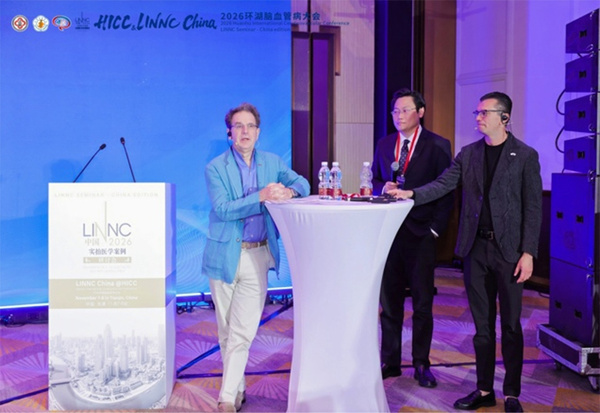
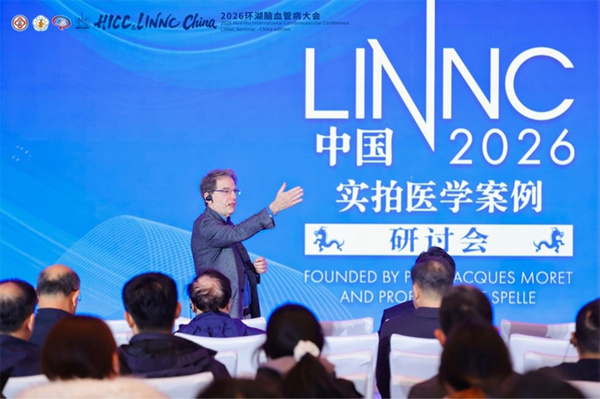
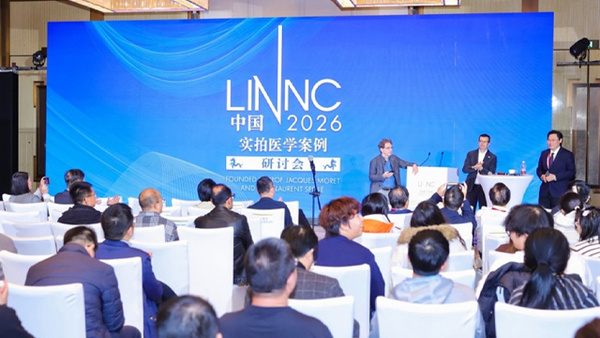
For the first time, LINNC China came to Tianjin! Prof. Laurent Spelle, Dr. Vitor Mendes Pereira, and Dr. Ming Wei opened the meeting by retracing how far the China edition has travelled: from Shanghai with Prof. Liu in 2019 to Beijing with Prof. Hongqi Zhang, through remote sessions during the pandemic, and now to Tianjin.
The opening day mixed recorded cases, live discussion and industry sessions, led by Prof. Laurent Spelle, Dr. Vitor Mendes Pereira, and Dr. Ming Wei. The advantage of these LINNC Seminars is that the sessions are interactive, faculty can stop any recorded case to zoom in on a technical step, and with outcomes already known, discussion stays on the decisions.
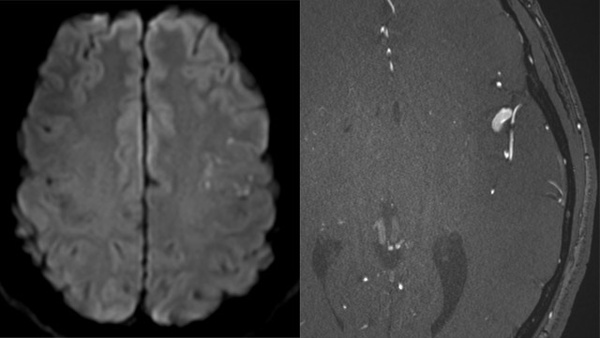
The first case opened with a question rather than a technique: should an unruptured dysplastic ACom aneurysm in a 67-year-old smoker be treated at all? Faculty weighed family history, smoking and vessel wall imaging, and most of the audience favoured treatment. After Y-stent-assisted coiling, during which the left A2 was lost, follow-up at 1.5 years showed complete resolution.
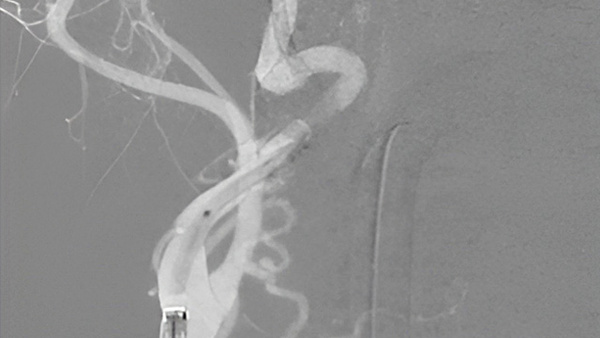
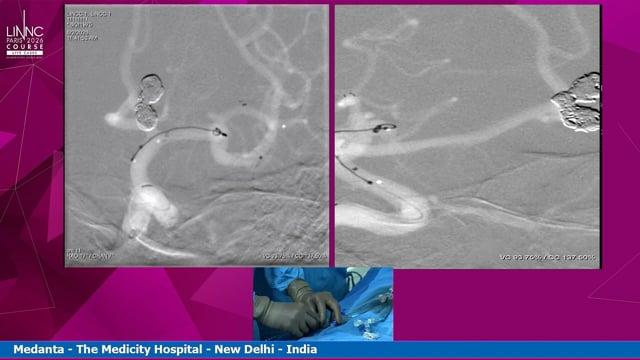
Next came a dural fistula with cortical venous reflux, with a catch: the shunt sat in the epidural portion of the vein rather than in a sinus, ruling out a venous approach. Bilateral transarterial PHIL embolization was performed instead, and complete occlusion was confirmed at two years.
Faculty stressed checking every meningeal feeder and reaching the foot of the draining vein, and compared PHIL with Onyx, noting that PHIL is not available in China. The consensus: know when to stop. Halt once venous reflux becomes excessive, even if not every feeder is reached, and re-image at follow-up.
Dr. Chuan He then presented unruptured ACom and PCom aneurysms treated with stent-assisted coiling using Target Tetra coils. Faculty observed that a good coil is harder to manufacture than a laser-cut stent or flow diverter, and praised the absence of microcatheter kickback at detachment, which matters most in small aneurysms.
Dr. Chuan He reserves Tetra coils mainly for small sidewall and PCom-type aneurysms.
The day's most sobering case began with a 54-year-old woman admitted at GCS 8 after a bicycle fall. Her bleeding pattern pointed to a vascular cause rather than trauma, and angiography revealed basilar tip and AICA aneurysms. As either could have bled, both were completely occluded with balloon-assisted coiling, and the recording showed each step, including deflating the balloon before every detachment to check basket stability.
Severe vasospasm followed. During angioplasty of the carotid and MCA, the vessel ruptured, likely from balloon overinflation, and the patient died the following day. Panelists warned that very compliant balloons tend to dissect the normal vessel beyond the stenosis; some now use only small, low-pressure balloons, while several Chinese colleagues rely mainly on repeated intra-arterial infusion.
Dr. Ming Lv then took the audience through staged, innovative embolization strategies for bifurcation aneurysms, from LVIS- and Atlas-based stenting techniques to flow diverters and intrasaccular devices, with the WEB preferred. Faculty praised the combined WEB and flow-diversion reconstructions.
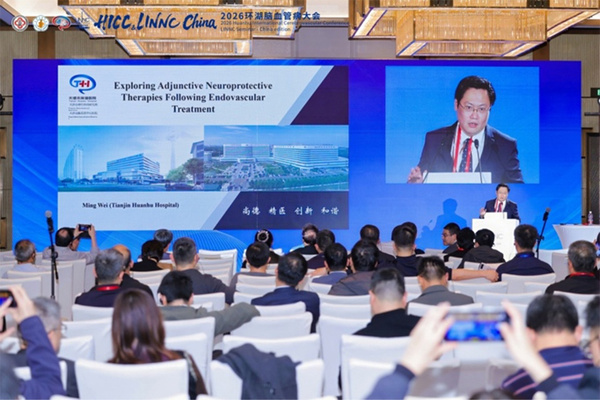
In a joint hour with the HICC meeting, Dr. Ming Wei looked beyond the catheter. Although thrombectomy has been standard of care since 2015, only about 47% of patients reach a favourable functional outcome, as recanalization does not guarantee tissue reperfusion. The session covered adjunctive neuroprotection and the centre's neuroprotection and brain-computer interface trials.
At the Stryker symposium, Dr. Li Xifeng presented Target Tetra coils for small aneurysms, where shallow sacs, thin walls and a high neck-to-dome ratio make coiling demanding. The tetrahedral design offers stable framing, softness and low delivery resistance, and the practical tip was to size slightly larger than planned.
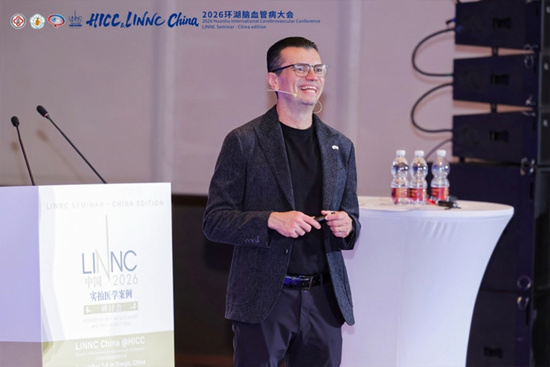
Dr. Vitor Mendes Pereira then made the case for first-pass success: a carotid-T occlusion recanalized in a single pass by bringing all devices up together, using two stent retrievers in a modified BADDASS technique. The approach also suits remote robotic procedures, where a second pass is far more stressful. Asked whether he uses it for every terminal lesion, he said he does not; the Chinese team reserve dual stent retrievers for rescue.
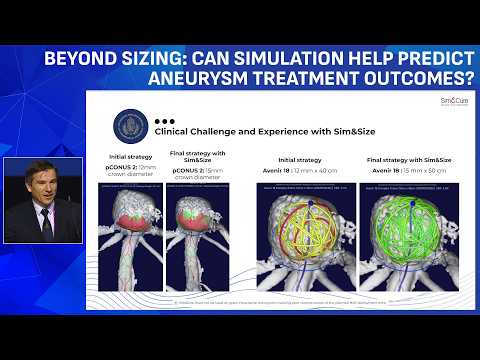
In the final case, an unruptured ACom aneurysm was treated with a WEB sized using simulation software. Follow-up imaging showed the device had deformed, but the panel agreed this reflects normal healing and should not be mistaken for true recurrence.
Reported by Eileen Liu
Read the day 2 report